
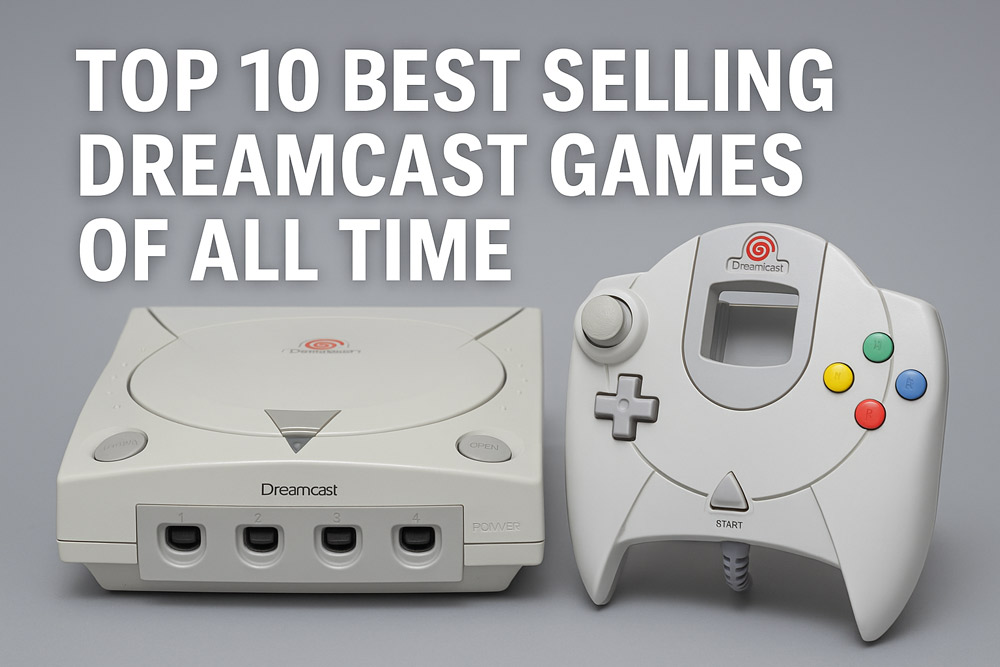
Top 10 Best Selling Dreamcast Games of All Time
September 9th, 1999—do you remember? The radio was spinning Smash Mouth, Napster had everyone tying up phone lines, and malls still smelled like Cinnabon and new sneakers. That Thursday after school I hustled to Software Etc., preorder receipt flapping in the wind, because the Sega Dreamcast finally hit American shelves. Behind the glass the console glowed bright-white, looping Soulcalibur footage so sharp it looked illegal. Kids pressed their noses to the screen; parents muttered about homework. We didn’t care. With its built-in modem, tricked-out Visual Memory Unit, and that hypnotic orange swirl, the Dreamcast promised arcade thrills in our bedrooms. Sleep-over weekends turned into Crazy Taxi marathons; online trash-talk kicked off with NFL 2K’s very first snap. For two magical years America was Dreamcast Country—and whether you were 12 or 32, life felt wired, pixelated, and full of possibility. Even now, that startup chime sparks goosebumps faster than cans of Surge.

10. NFL 2K2
U.S. Release: September 19, 2001
U.S. Copies Sold: ≈430,000
Yes, the Dreamcast was already on hospice care in late 2001, yet NFL 2K2 felt anything but terminal. Visual Concepts packed Franchise depth, tight controls, and still-functioning online servers into one last hail-mary. Commentary sounded TV-authentic, Dan Stevens and Peter O’Keefe reacting to sacks like seasoned pros. Bill Belichick’s missing name became a dorm joke—“NE Coach” scores again! Lag stayed mild over 56 K, and slick VGA output showed 480p hash marks sharper than rival consoles. Sundays morphed into beanbag tournaments, pizza cooling while we argued whether Warren Sapp was unblockable. When the clock hit zero, we reset, playing one more quarter because no one wanted the season over.
What Made This Game A Hit in the American Household
Forget arcade football—NFL 2K2 brought ESPN polish and online play while Madden was still offline. Smooth animations, deep Franchise, and VGA clarity made it the perfect Sunday substitute when there wasn’t a real game on. It felt grown-up, yet unmistakably Sega.

9. NBA 2K
U.S. Release: November 10, 1999
U.S. Copies Sold: ≈480,000
Before Shaq joined Twitter, NBA 2K brought smack-talk to living rooms everywhere. “True Motion” captured Iverson’s crossover and Larry Johnson’s post-up in fluid 60 FPS, miles beyond NBA Live. VMU season saves stopped the “whose card is this?” debate. Midnight tournaments, Code Red, and Bob Steele’s goofy calls filled the den. SegaNet tested skills beyond the block, dial-up screech and all. NBA 2K didn’t just imitate TNT— it made you feel like the producer, replay angles included. Even create-a-player nights spawned seven-foot point guards with tattoos moms banned back then either.
What Made This Game A Hit in the American Household
Analog triggers mimicked shooting arcs, online play glued trash-talkers together, and graphics finally looked like a TNT broadcast. NBA 2K felt modern and competitive, giving hoops fans a reason to keep the console humming into 2000. Madden folks peeked over the couch, all jealous of the swagger.

8. Resident Evil Code: Veronica
U.S. Release: February 29, 2000
U.S. Copies Sold: ≈500,000
Code: Veronica gave Dreamcast owners a survival-horror exclusive that felt decadent. Fully 3D corridors replaced static backdrops, and the VMU pulsed your heartbeat blood-red—panic without pausing. Load times vanished, Antarctic labs shimmered, and we hoarded ammo like misers, screaming whenever Tyrant crashed a plan. Parents figured it was “just zombies”; they missed Resident Evil’s future unfolding. Plus the VMU health bar meant no menu fuss, keeping tension constant. Boss cutscenes played in-engine, blowing PlayStation-trained minds wide open during sleepovers past midnight sessions.
What Made This Game A Hit in the American Household
Real-time environments, VMU health readouts, and movie-quality cutscenes pulled even spectators into the tension. Code: Veronica proved Dreamcast could host big-budget, adult experiences—raising the console’s credibility beyond arcade ports.

7. NBA 2K1
U.S. Release: October 26, 2000
U.S. Copies Sold: ≈520,000
NBA 2K1 refused sophomore slumps. Online voice chat, Rucker Park, and deep Franchise tools let us relocate the Grizzlies to Anchorage—just to annoy purists. Sweat gleamed, post moves looked ESPN-worthy, and EB Games’ overnight ladder awarded a gaudy Dreamcast jacket. Run-D.M.C. tracks kept heads bobbing during dial-up waits. PS2 headlines roared, yet this little white box still crossed over and dunked. Four-player season files via VMU juggling fueled roommate bragging rights. Lag stayed mild, buzzer-beaters nerve-shredding yet fair for all participants.
What Made This Game A Hit in the American Household
Online leagues, street courts, and a banging soundtrack pushed NBA 2K1 beyond roster update territory. It became a social hub—half sports bar, half chat room—proving SegaNet’s chops during the wild millennium shift.

6. Tony Hawk’s Pro Skater 2
U.S. Release: September 20, 2000
U.S. Copies Sold: ≈550,000
Skate culture peaked and THPS2 on Dreamcast was the slickest ride. Sixty silky frames, VGA clarity, and manuals linking endless combos turned concrete into possibility. Create-a-Skater let midwest kids shred beside Rodney Mullen; the Park Editor devoured Saturdays. Bad Religion and Rage blasted, non-gamers hummed. Load times? Blink-and-you-miss. With jump-pack rumble every landing rattled palms, and we could almost smell parking-lot asphalt—without real scrapes or bruises.
What Made This Game A Hit in the American Household
Fast engine, crystal textures, and iconic punk tunes made THPS2 the console’s definitive port. Each alley-ooped grind felt smoother than rails elsewhere, dragging parents and siblings into late-night score chases.
Also Check Out:
Love reminiscing about pixelated glory? Swing by our rundown of the best ’90s video game consoles of all time—spoiler alert, the Dreamcast makes a cameo. And if your attic is bursting with cartridges, peep our guide on where to sell your video games for cash. Trust us, your old library could pay for that family beach trip. Seriously, Grandma’s neglected NES stack might turn into plane tickets faster than you can say “Konami Code.”

Hot Retro Product:
Can’t finish this list without itching to play? Grab an original Sega Dreamcast System from Rancho Retro Games. Every unit’s refurbished, includes the swirl logo pad, and ships fast—no “disc read” roulette. Plug in a VGA box and relive these classics exactly as you remember today.

5. Sonic Adventure 2
U.S. Release: June 19, 2001
U.S. Copies Sold: ≈600,000
Sonic Adventure 2 threw the hedgehog a tenth-birthday bash. Hero and Dark campaigns debuted edgy Shadow, City Escape’s snowboard dash became gaming’s first meme, and two-player races glued siblings to split-screen mayhem. Chao Gardens deepened, linking to Game Boy Advance. Pyramids and space stations pushed hardware hard, yet fans stayed cool. I rented it before finals; sunrise arrived first. The soundtrack lodged itself, chores feeling like grind-rails of destiny; boss fights stayed cinematic without sacrificing speed or swagger whatsoever.
What Made This Game A Hit in the American Household
Dual storylines, sharper controls, and “Escape From the City” earworms pulled whole families in. Chao raising added Tamagotchi vibes—even moms played. In skeptical living rooms, Sonic Adventure 2 created instant believers.

4. NFL 2K
U.S. Release: September 9, 1999
U.S. Copies Sold: ≈650,000
Launching with the console, NFL 2K filled Madden’s absence with swagger. Smooth visuals, dynamic lighting, and VMU play masking made kiosks magnetic. Analog triggers delivered jukes precise enough to shame arcade sticks. My Tecmo-loving dad watched a replay and whispered, “We’re in the future.” Highlight reels became ritual; friends gathered between rounds to watch digital ESPN. Sports-hating roommates cheered polygon crowds, thunderous stadium acoustics pouring from our tiny CRT. Tutorial drills were so intuitive Mom executed a slant route flawlessly—converting her from spectator to trash-talker in minutes.
What Made This Game A Hit in the American Household
Day-one graphics, hidden plays, and lightning controls converted Madden loyalists. NFL 2K felt like TV with arcade spice, making PS2’s benchwarm status obvious back in 2000.

3. Crazy Taxi
U.S. Release: January 24, 2000
U.S. Copies Sold: ≈750,000
Crazy Taxi made Offspring lyrics a national anthem. Blue skies, impossible physics, and real brands let you fishtail toward KFC or Tower Records in reckless style. Drifts, boosts, and big air felt natural, perfect at parties. Magazines printed score tables; we phoned brag calls on landlines. Product placement felt cool, matching streets we skipped class to roam. Quick sessions turned skeptics into wheel-screeching maniacs. Pure, noisy Sega fun—even today its warped gravity drops jaws, and the soundtrack sparks instant air-guitar on road trips everywhere for us.
What Made This Game A Hit in the American Household
Instant pick-up-and-play rules, loud music, and recognizable stores meant anyone could join. Families queued like arcade days, making Crazy Taxi a crossover smash back then.


2. Soulcalibur
U.S. Release: September 9, 1999
U.S. Copies Sold: ≈1,000,000
Soulcalibur was a launch-day miracle, outshining its arcade parent. Armor gleamed, water rippled, and 60 FPS clashes wowed crowds. The intuitive three-button system welcomed mashers while Guard Impacts challenged pros. Versus nights ended with sore push-ups thanks to brag rules. Even casual observers gasped at smooth weapon trails and booming announcer. Namco’s masterpiece felt like high-end CGI live, proving 128-bit hype real beneath glass-shelved TVs across America at all 1999 launch parties nationwide.
What Made This Game A Hit in the American Household
Soulcalibur flaunted Dreamcast’s muscle, demolishing cabinets and rivals. Easy to learn yet deep, it lured siblings, parents—everyone—into the ring, pushing weekend tournaments back in 2000.

1. Sonic Adventure
U.S. Release: September 9, 1999
U.S. Copies Sold: ≈1,100,000
Sonic Adventure was the Dreamcast’s neon welcome sign. Emerald Coast’s whale chase proved 3D Sonic could fly. Six characters roamed hub worlds that felt endless in 1999. The VMU turned Chao raising into portable obsession, devouring recess breaks. Loopy stages delivered unfiltered adrenaline, while fishing controller antics and earnest J-rock added charm. Sonic Adventure became the pack-in demo parents couldn’t escape, moving a million copies and anchoring the console’s identity. Speedrunners still dissect frames as Twitch chat sings “Open Your Heart,” echoing bright optimism two decades after that fateful launch.
What Made This Game A Hit in the American Household
Launch-day wow factor, addictive Chao Garden, and ear-worm songs made Sonic Adventure irresistible. Kids begged, parents caved, and Sega sold units—memories still won’t let go.
Closing Thoughts
Cue that whooshing startup swirl, because writing this list has my thumbs twitching again. The Dreamcast burned bright and fast, but its best selling dreamcast games shaped modern play: online matchups, broadcast-style sports, quirky genre blends. More important is the feeling—late-night soda runs, arguing over save slots, teaching Mom reverse-grinds. For many of us thirty-somethings, powering the white box is opening a photo album that smells of pizza grease and compressed air. Its early demise gifted underdog charm you still root for. Boot Soulcalibur, see “Press Start Button,” and you time-travel to a carpeted basement where rent, taxes, and streaming bills don’t exist. Dust off the VMU, hook up a VGA cable, and remember: the Dreamcast never really said goodbye. It’s just waiting for the next controller rumble. Thanks for sharing the ride down memory lane, friends.





Leave a Reply